
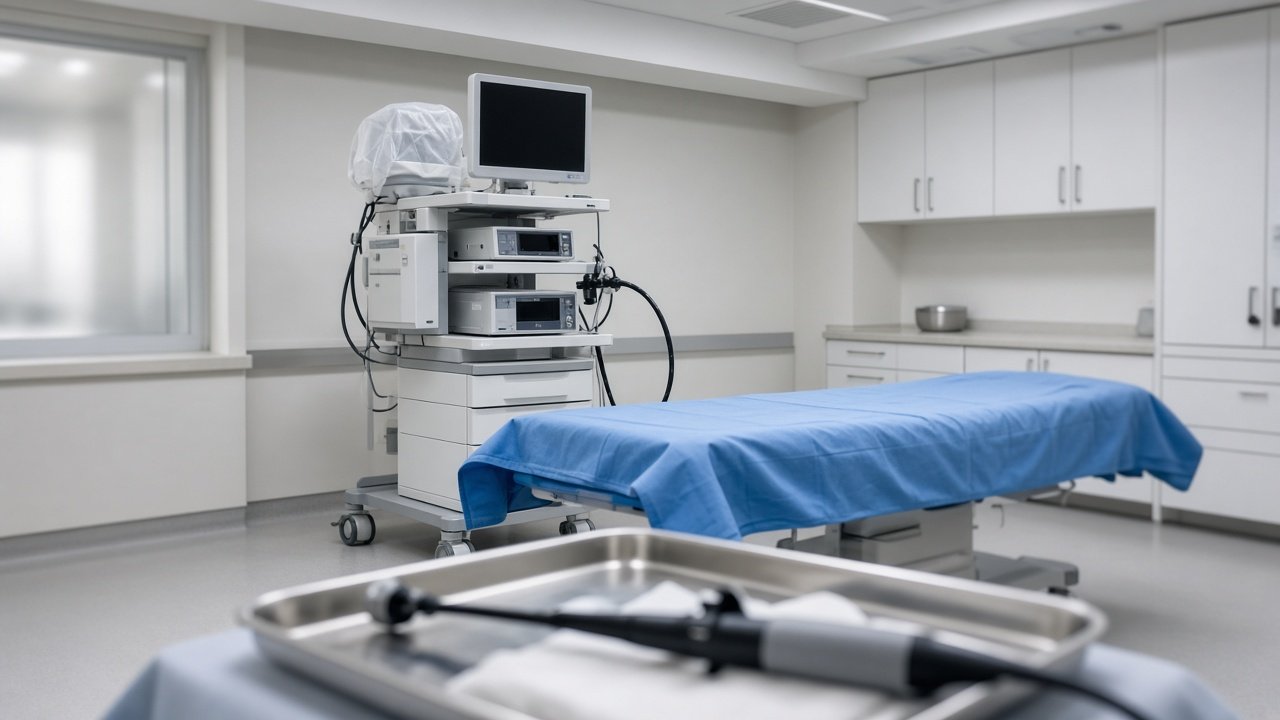
- What it examines
- Food pipe, stomach, and duodenum, with a thin flexible camera.
- Preparation
- Fasting, a medicine review, and a companion if sedation is used.
- Afterwards
- A sore throat or gas is common. Biopsy results, if taken, come later.
- Not for
- A single evening of acidity that has already settled.
People often delay an endoscopy because they picture a large tube and a long hospital stay. An upper GI endoscopy is shorter and calmer than that picture. It is also the test that answers questions blood tests cannot: is there an ulcer, is the food pipe inflamed, is there a reason for anaemia? This is the sequence Dr Ajay Shesherao Shinde walks through with patients in Secunderabad.
Why is an upper GI endoscopy done?
- Food sticking, or pain on swallowing
- Heartburn that persists or returns as soon as treatment stops
- Vomiting blood, black stools, or anaemia without a clear cause
- Upper abdominal pain that may be an ulcer
- Suspected coeliac disease, or a need to check for H. pylori with samples
- Unexplained weight loss with digestive symptoms
It is one tool, not a package everyone with gas should have. The acidity guide explains who can start with a treatment trial and who should go to a camera test earlier.
What should you do before the test?
| Step | Why it matters |
|---|---|
| Stop solid food for the hours the clinic specifies | Food in the stomach hides the lining and raises risk during sedation |
| List blood thinners, diabetes medicines, and allergies | Some doses are timed differently on the day |
| Arrange a ride home if sedation is planned | You will not be fit to drive |
| Bring old endoscopy reports | They stop a useful comparison from being missed |
What happens during the test?
You lie on your side. A mouth guard protects your teeth and the instrument. The doctor passes a slim camera through the mouth, down the food pipe, and into the stomach and duodenum. Air opens the view, which is why you may feel full. If a sample is needed, a tiny piece of lining is taken. You do not have pain nerves that feel that sample the way skin would. The pictures are seen live on a screen. Details of local endoscopy care are on the service page.
What happens after you go home?
The sedation wears off over the day. A scratchy throat and belching are common and usually fade. Eat gently when the clinic says swallowing is safe. Call or seek urgent care for chest pain, trouble breathing, vomiting blood, black stools, or severe abdominal pain. Those are uncommon, and they are the reasons the discharge advice is specific. A normal exam is a result. It means the lining that was seen did not show the disease being looked for. It does not erase symptoms that come from reflux sensitivity or from another organ, so the follow-up conversation still matters.
Ask, before you leave, whether a biopsy was taken and how you will receive that report. Same-day comments describe what was seen. The lab sentence comes later.
How to plan an endoscopy in Secunderabad
Dr Ajay Shesherao Shinde consults at Medicover Hospital, Secunderabad, and advises whether an upper GI endoscopy, a colonoscopy, or neither is the right next step. Call +91 98901 05648. Bring the list of antacids and painkillers you have already used.
Common questions
Is an upper GI endoscopy painful?
With sedation, most people do not remember discomfort from the test itself. You may have a numb throat spray, a brief gag as the tube passes, and a mild sore throat or bloating afterwards. The test usually takes well under half an hour.
How long should I fast before an endoscopy?
The clinic gives the exact instruction. A common plan is no solid food for about six to eight hours, and a limit on clear fluids closer to the test. Follow the sheet you are given, especially if you have diabetes.
Can I go to work after sedation?
No. If you receive sedation you need an adult to take you home, and you should not drive, sign important papers, or operate machinery that day. Plan a quiet remainder of the day.
Will a biopsy mean they found cancer?
No. Biopsies are routine. They check for inflammation, H. pylori, coeliac disease, and, when needed, cells that look abnormal. Many biopsy results are benign. The lab report takes a few days.
Where can I have an upper GI endoscopy in Secunderabad?
Dr Ajay Shesherao Shinde, a gastroenterologist at Medicover Hospital, Secunderabad, advises when an endoscopy is useful and performs endoscopic procedures when they are indicated. Call +91 98901 05648.
Related reading from the clinic
This article is general education from the clinic of Dr Ajay Shesherao Shinde in Secunderabad, Hyderabad. It does not diagnose a condition or replace a personal consultation. Seek urgent care for severe pain, vomiting blood, black stools, chest pain, or confusion with jaundice.